


Dental Extractions
Dental Extractions
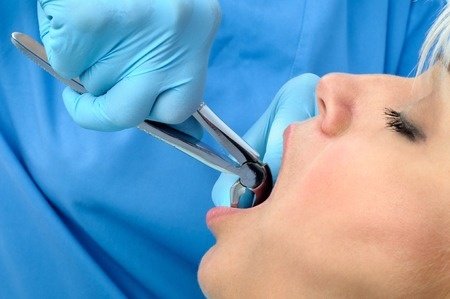
At Burpengary Dental we strive to achieve the best outcome over the long term and sometimes an extraction is the best treatment option. Removing a tooth is a less expensive and faster option for relieving dental pain; extraction may also be suggested for teeth that may be loose or unable to be restored. Our dentists will always discuss your options in dental treatment to ensure you are well-informed and comfortable in our care.
Important facts
- Tooth extraction is the removal of a tooth from its socket in the bone.
There are two types of extractions:
- Simple extractions (Normally performed on teeth that can be seen in the mouth)
- Surgical extractions (Often on teeth that are broken off at the gum line or has not come into the mouth yet)
- Research shows that taking nonsteroidal anti-inflammatory drugs (NSAIDs) such as ibuprofen can greatly decrease pain after a tooth extraction.
- X-rays are taken as a precautionary measure by dentists at Burpengary Dental to avoid complications that may arise during the procedure.
- The length of the procedure can vary from 30 min – 50 min for simple extraction and 40 mins – 60 mins for a surgical extraction.
The time taken for the extraction will be dependent on the following factors:
- Number of roots of the tooth
- Length of the roots
- Position of the tooth
- Amount of tooth remaining above the gum line
Some patients who suffer from anxiety or even needle phobia may find relief with the use of Penthrox™ sedation. This green ‘whistle’ is a hand-held, disposable, inhaler device, that administers methoxyflurane. Methoxyflurane has been commonly used for more than 30 years in Australia, providing safe, quick and effective analgesic (pain-relief) for short-term use. It is successful in providing pain and anxiety relief to conscious patients during extraction procedures. It is much easier to use than nitrous oxide (happy gas), and can result in less adverse side effects, such as nausea, that nitrous oxide can sometimes cause.
Why do I need my tooth extracted?
Teeth may have to be removed for several reasons as below:
Extensive damage to a tooth
If the tooth is badly decayed or rotted or even damaged due to trauma.
Periodontal disease
Poor dental hygiene and a build-up of plaque and calculus “tartar” can cause gums to become inflamed and infected “periodontal disease”. If this is not treated promptly the underlying bone and supporting tissues of the tooth are likely to be damaged. Despite treatment, the infection may cause the tooth to become loose, whereby the tooth will need to be removed.
Prevention of complications
If badly diseased teeth are not extracted promptly, complications such as infection or abscesses in the teeth or roots, or the spread of infection through the blood stream to other parts of the body, may occur. This may affect your general health.
To improve appearance
As part of orthodontic treatment or a treatment plan to improve the appearance of teeth, our dentists at Burpengary Dental may recommend removing a tooth which interferes with another.
Teeth with no function
As part of orthodontic treatment or a treatment plan to improve the appearance of teeth, our dentists at Burpengary Dental may recommend removing a tooth which interferes with another.
Vertical cracks in a tooth root
A root may shift and split and crack upwards or downwards. If repair is not possible, extraction may be necessary.
Frequently Asked Questions
Will my extraction be difficult?
The methods of extractions vary depending on the type of tooth and its roots, and its position in the jaw. Some teeth are relatively easy to remove, while others can be difficult. Difficult extractions are usually due to:
Adjacent teeth having crowns or large restorations (fillings)
The tooth being in an abnormal position and affecting neighbouring teeth
A nerve lying near the tooth to be extracted
Roots that are large and curved, or that penetrate deeply into the jaw bone
An unerupted or impacted tooth, or a tooth that is fused to the jaw bone (ankylosis)
How can I take care of the extraction site after the procedure?
Rest at home after the extraction
Depending on the number of teeth removed, you may need to take time off work
Avoid drinks containing alcohol while you are taking pain killers or antibiotics
Avoid smoking for the first 48 hours
Eat soft foods for the first two days
Use ice packs to reduce any swelling and pain
What do I do with a broken tooth?
If you’ve broken a tooth and are experiencing no pain, rinse your mouth out with warm salty water. This will keep the area clean until you have to time come see us. If this was caused by a blow, it’s important to place a cold compress on your face next to the injured tooth to reduce swelling. Call Burpengary Dental as soon as possible to make sure the tooth doesn’t break more!